

April Conditions Are Changing.
Most DSPs Don’t.
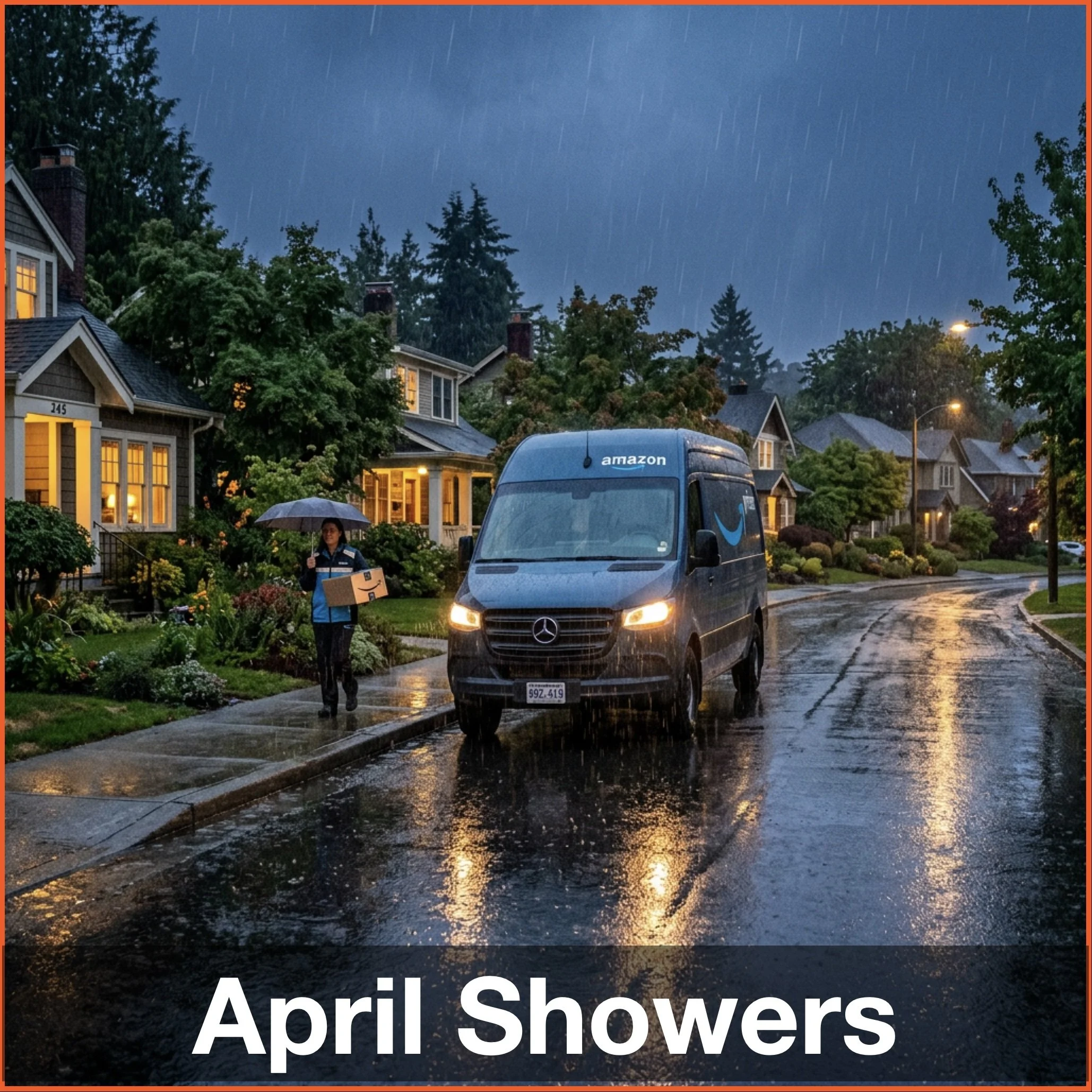
April shows up as rain.
But what it really brings is risk. Not new risk—changing risk. The routes don’t change. The expectations don’t change. But the conditions do—and your drivers absorb that gap. Wet roads mean longer stopping distances. Lower visibility. Tighter reaction time. And the mistakes that follow aren’t dramatic—they’re small:
Following a little too close
Braking a second too late
Taking turns like it’s a dry day
That’s what drives accidents in April. Not severity—frequency. And frequency is what drives your insurance.
The operators who stay ahead don’t just say “be careful.”
They watch the patterns:
Who struggles in poor conditions
Where risky behavior repeats
When pace starts working against safety
Because if you catch it early, it doesn’t become a claim. Then the shift happens.
April isn’t just rain—it’s the start of heat.
And this is where risk moves from vehicles… to drivers. Fatigue shows up earlier. Hydration slips. Focus drops. That’s where workers’ comp starts building:
Strains
Slips getting in and out of vans
Fatigue-driven mistakes
Not one big moment—accumulation.
Same pattern as rain. If you see it early, it’s manageable. If you don’t, it becomes a claim. Most DSPs don’t ignore risk. They react to it. By the time you feel it, you’re already behind it.
Bottom Line
April isn’t about rain. It’s about what’s coming next. Risk is already shifting—the only question is whether you’re seeing it early enough to control it.
Remember: Take control of your risk — and be the guardian of your business’s longevity.
#Amazon #AmazonDSP #DisciplineSeason #Safety
