

The Employee Left Work Injured.
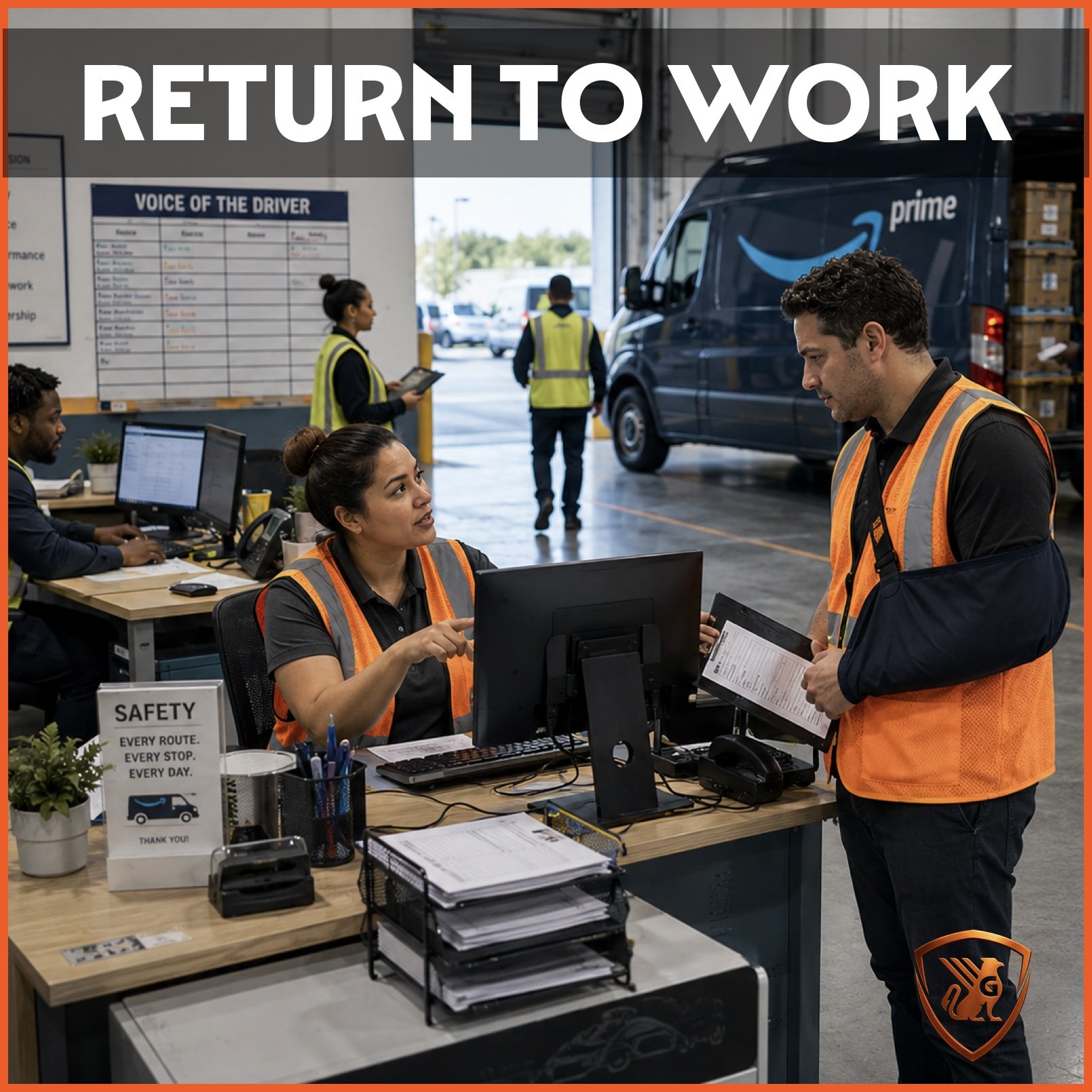
The Bigger Decision Came After.
Employee injuries are an unfortunate reality for every Amazon DSP. When they happen, most operators know exactly what to do. They report the injury, make sure the employee receives medical care, and begin the workers' compensation process. Those first steps matter, and they should never be overlooked.
Where many operations unintentionally lose momentum isn't during the initial response—it's after the claim has been reported.
Waiting Is Still a Decision
Once the paperwork is complete and medical care has begun, many operations simply wait. They wait for the next doctor's appointment, wait for restrictions to change, and wait until the employee is fully released before thinking about bringing them back to work.
At first glance, that feels reasonable. After all, no one wants to return an employee to work before they're medically ready.
But waiting for a full recovery isn't the only option.
Returning to Work Doesn't Always Mean Returning to the Route
One of the most overlooked questions an employer can ask is whether there is meaningful work an injured employee can safely perform while they recover. For many DSPs, the answer is yes.
A driver recovering from a shoulder injury may not be ready to deliver packages, but they may be able to assist with dispatch, complete vehicle inspections, organize equipment, support training, review safety documentation, or help with administrative responsibilities that fit within their medical restrictions.
The work may look different. The contribution doesn't.
Why Staying Connected Matters
Return-to-Work isn't simply about filling a position. It's about maintaining a connection between the employee and the operation.
Employees who remain connected to the workplace often have an easier transition back to full duty because they continue to be part of the team's routine instead of becoming separated from it. Employers retain an experienced employee, reduce operational disruption, and may avoid unnecessary lost-time claims that increase costs over time.
The alternative is rarely intentional. Without a structured Return-to-Work plan, days away from work can quietly become weeks. The employee becomes further removed from the daily rhythm of the operation, returning to work becomes more difficult, and what started as a manageable injury can gradually create operational and financial challenges that extend well beyond the original incident.
It's More Than an HR Decision
Most organizations naturally view Return-to-Work as an HR responsibility. Others see it primarily as another step in the workers' compensation process.
Both perspectives are true. But they're incomplete. Return-to-Work is also an operational decision. And like many operational decisions, its impact extends well beyond the moment it is made.
The Bigger Lesson
At GRYPHON, we've noticed that many of the decisions shaping a DSP's future don't look like risk management decisions at all. They look like hiring decisions. Coaching conversations. Documentation practices. Return-to-Work plans.
In the moment, none of those decisions feel like they're affecting insurance. But over time, they can influence claim costs, employee engagement, operational continuity, insurance performance, and ultimately the long-term sustainability of the business.
That's why we believe risk management isn't something that begins when an incident happens or when a policy renews. It's built every day through the operational decisions a business makes.
Some of those decisions produce immediate results.
Others take months—or even years—to fully reveal their impact.
Return-to-Work is one of them.
